
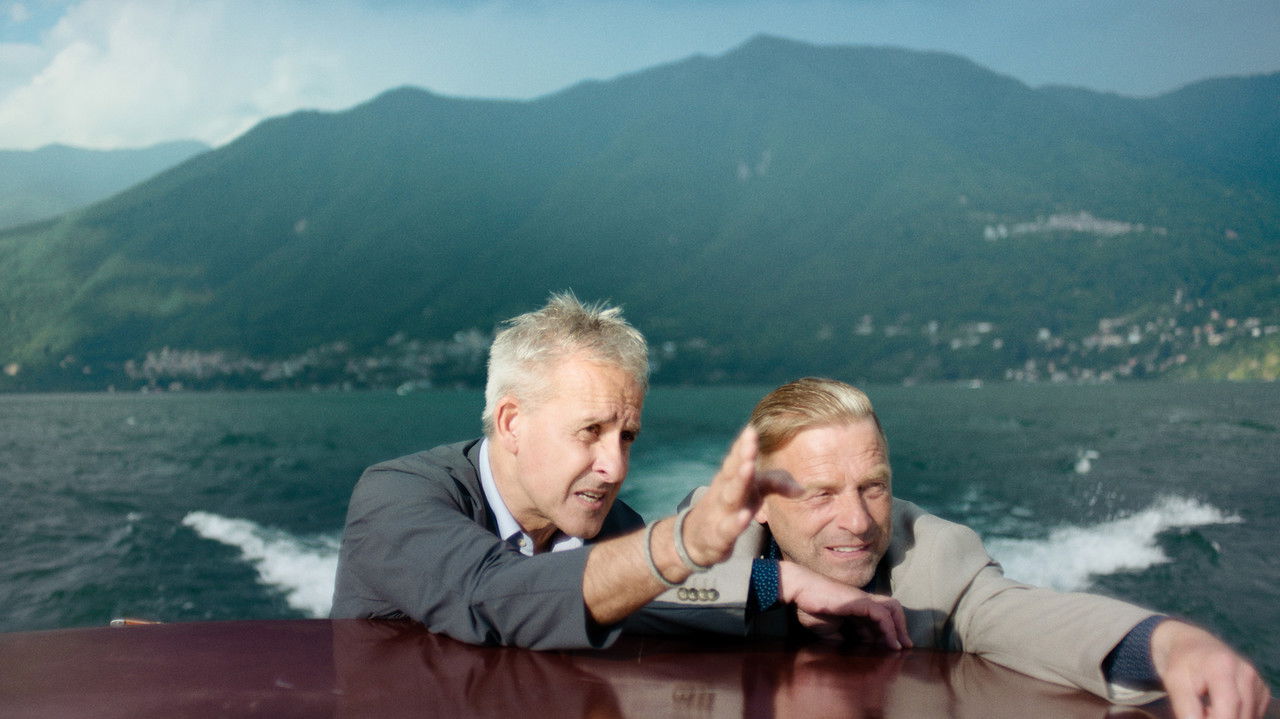
 Ein Sommer in Italien - WM 19902026 · Film · ★ 8.4/10Documentary from Nadja Kölling and Vanessa Nöcker about the soccer world championship 1990 in Italy.View documentary »
DokuStreams
184 documentary films and series from Germany, Austria and Switzerland, 1958 to 2026, filed under seven topics.
Latest documentaries
Ein Sommer in Italien - WM 19902026 · Film · ★ 8.4/10Documentary from Nadja Kölling and Vanessa Nöcker about the soccer world championship 1990 in Italy.View documentary » Poldi2026 · Film · ★ 7.0/10Footballer, entrepreneur, fan favorite and true community hero — Lukas Podolski reflects on his journey and what comes next in this intimate documentary.View documentary »
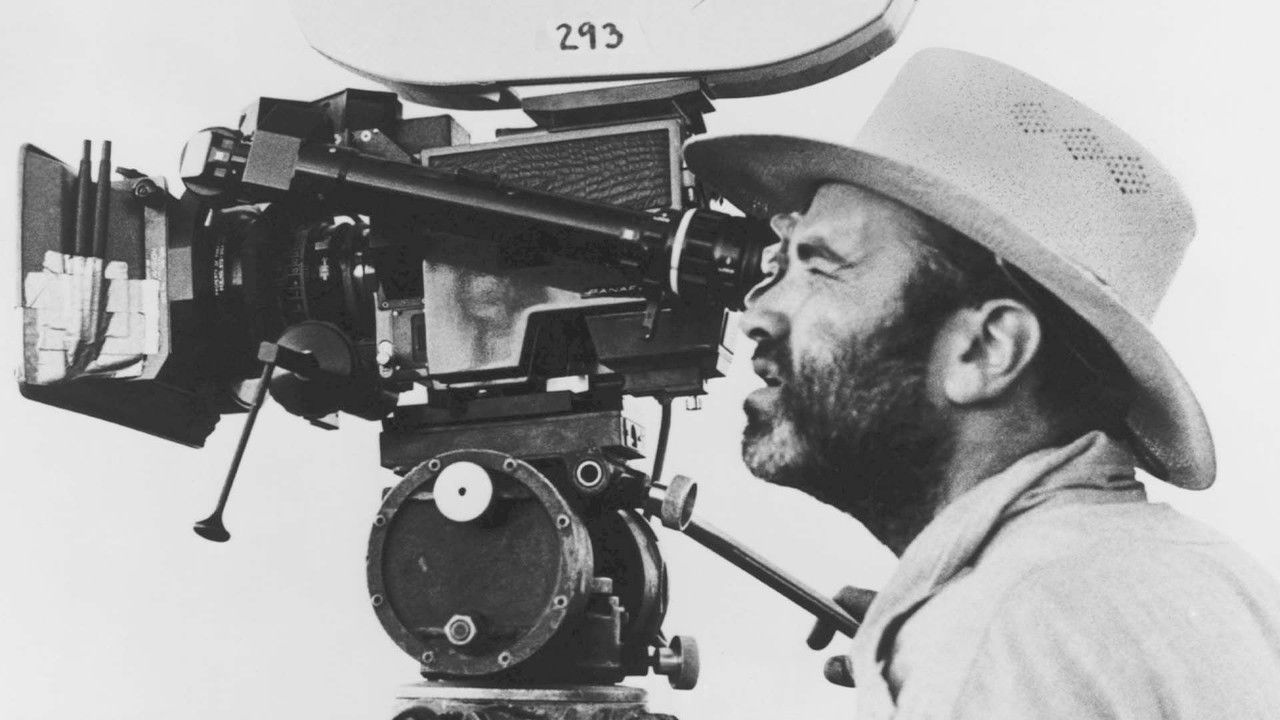 Terrence Malick - Filming the Invisible2026 · Film · ★ 6.7/10Traces Malick's artistic journey – from his philosophical studies at Harvard through his early masterpieces "Badlands" and "Days of Heaven" to his later films "The Thin Red Line" and "A Hidden Life." …View documentary »
 100 Years of Route 662026 · Film · ★ 7.0/10Many people have Route 66 on their bucket list: To ride it once, from Chicago to Los Angeles, on a Harley. Or in an old American road cruiser. And experience what we know from the movies: the endless …View documentary »
 Auf dem Wasser durch die USA2026 · 4 episodes · ★ 7.0/10Along the U.S. East Coast, through the Great Lakes and down the Mississippi to Florida, the 10,000-kilometre Great Loop reveals vibrant cultures, historic engineering and remarkable wildlife, from …View documentary »
 Thomas Müller - One of a Kind2025 · Film · ★ 8.4/10Title collector, popular figure, advertising icon, and the face of German football – that's how we know Thomas Müller. But who is the person behind the superstar? We accompany Thomas Müller over a …View documentary »
 Unser Team - Die Heim-EM 20242025 · Film · ★ 9.2/10At the UEFA EURO 2024 in Germany, the DFB team under Julian Nagelsmann sparked new enthusiasm despite their quarter-final exit. The RTL documentary shows the team's transformation into a unit with …View documentary »
 Wunderland2024 · Film · ★ 6.7/10The train carriages in "Miniatur Wunderland" wind their way for kilometers through blooming landscapes and rocky mountain gorges. With the creation of this magical model universe, twin brothers …View documentary »
 Mein Name ist Otto2024 · Film · ★ 7.1/10The film tells the fairytale story of a scrawny East Frisian who, despite minimal starting opportunities, has had a unique career. Otto has always trusted his gut feeling, even when he often faced …View documentary »
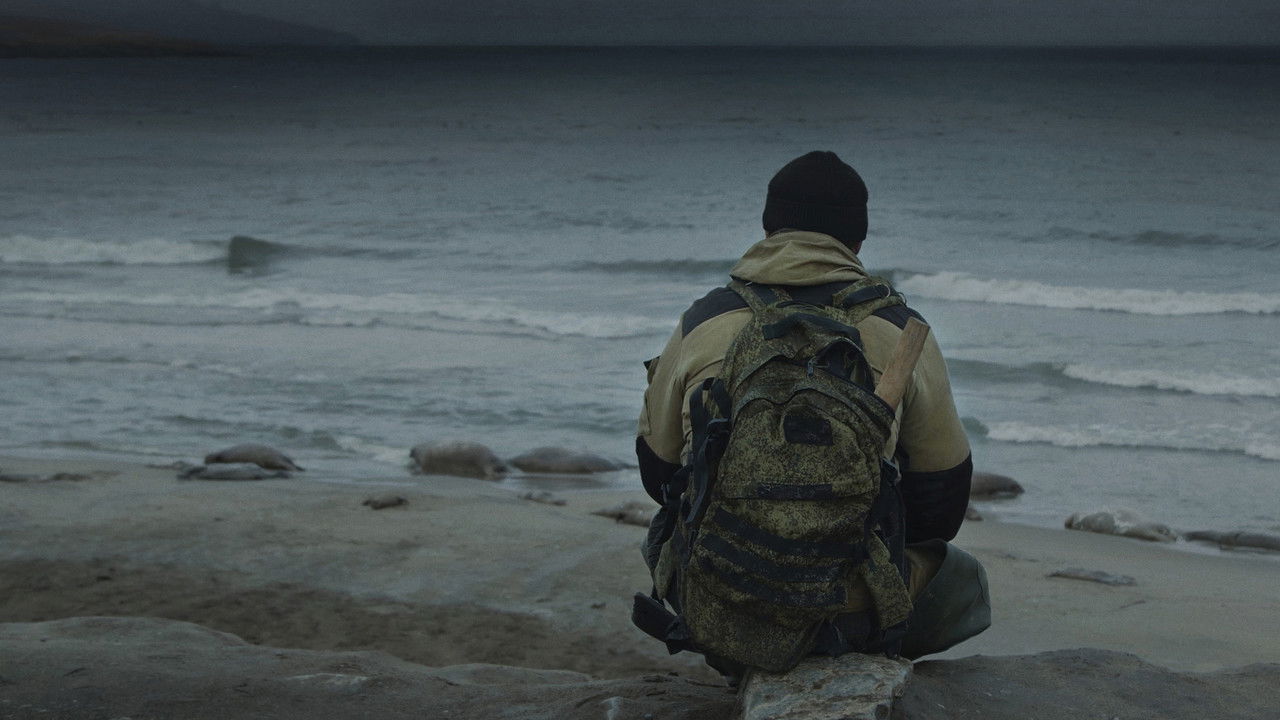 Haulout2024 · Film · ★ 7.6/10On a remote coast of the Russian Arctic in a wind-battered hut, a lonely man waits to witness an ancient gathering. But warming seas and rising temperatures bring an unexpected change, and he soon …View documentary »
The DokuStreams guide to German documentaries
DokuStreams: German documentaries, with Schumacher, Pina, More Than Honey, Tokyo-Ga, Expedition Happiness, The Hidden Life of Trees, Land of Silence and Darkness and Wild Russia
The German word for a documentary is Doku, and German-speaking Europe makes a great many of them. Public television in Germany, Austria and Switzerland has filmed its forests, coasts and mountains with a thoroughness few countries can match. Its cinema has produced directors who made the documentary a personal art: Werner Herzog, who would travel anywhere to meet a ski-jumper or an auctioneer, and Wim Wenders, who filmed a city, a dancer and a painter with equal curiosity. Its sports films follow a national football team into the dressing room, and its travel films follow young people around the world on bicycles and in old buses. DokuStreams is a guide to 184 documentary films and series of this kind, made between 1958 and 2026. It files them under seven topics, and gives each a page with its director, its running order and a Watch now button that leads to the official services carrying it.
The catalogue holds 140 films and 44 series, and the series have 3,293 episodes between them. Forty-two titles are filed under nature, twenty-four under science and technology, twenty-five under history and society, twenty under music and dance, twenty-three under art and cinema, thirty-one under sport and nineteen under journeys. This guide takes the seven topics one at a time, then looks at football, at the Alpine countries, at the series, at choices for children, and at the search and My List, and it closes with a plan for a first fortnight.
What DokuStreams is
DokuStreams is a viewing guide. Each of its 184 pages describes one documentary: its subject, the year and country in which it was made, its director, the people who appear in it, its length and, for a series, the order of its seasons and episodes. At the top of each page is a Watch now button with a country selector beside it. Choose the country you are in, press the button, and JustWatch opens with the services that carry the title there, whether by subscription, rental, purchase or free with advertising. The how to watch page sets out the three steps in brief.
The selection was made by hand from about 650 candidates, one summary at a time, with a mixed household in mind. It favours animals and landscapes, engineers and inventors, dancers and musicians, painters and film-makers, athletes and travellers, and it treats history through archaeology, cities and everyday life. A documentary earned its place by having something to show and by showing it with care.
The guide is written in English for viewers anywhere. The films themselves are in German, with a few in Swiss German and several made in English for international broadcast; the nature films in particular are widely shown abroad, and each title page states the original language.
How the pages are arranged
The site is laid out like a well-kept weblog. A white column sits on a grey ground, with the name in bold type at the top left and the search field at the right. Beneath them runs a wide banner of Alpine peaks, and under the banner a black menu bar with the topics and, at its right-hand end, the My List link.
The home page is a list of entries, newest first. Each entry has a large bold headline, a small framed still at the left, a line of details giving the year, the format and the score, a summary of two or three lines, and the words View documentary. At the right of the list stands a narrow column with three short lists: the seven topics with the number of titles in each, the ten most popular documentaries, and eight further lists such as football, the Alpine countries and the periods. Every other list page on the site uses the same entries, so the whole catalogue reads like one long, illustrated table of contents.
On a telephone the narrow column moves below the entries, the stills shrink to thumbnails, and the three-bar button opens the menu with a search field of its own.
Nature: forests, coasts and the wild east
Nature is the largest topic, with forty-two titles, and the nature guide lists the highlights. Germany's own landscapes come first. Wild Germany has run since 2011 and now counts thirty-eight episodes, each on one region: the channels of the Spreewald, the chalk cliffs of Rügen, the Wadden Sea, the Black Forest, the Bavarian Alps. The Green Planet, by Jan Haft, spends a year in a central European forest among red deer, foxes, wild boar and stranger residents such as the purple emperor butterfly. Secrets of the North Sea and Die Nordsee von oben look at the same coast from the water and from the air, Wild Baltic Sea sails from Denmark to the Curonian Spit in three parts, and Germany from Above and Bavaria - A magical journey are aerial portraits.
Two films about trees have found a wide audience. The Hidden Life of Trees is based on the bestselling book by the forester Peter Wohlleben, who argues that trees share food through their roots, warn one another of danger and look after their young; the film walks with him through the beech woods he manages and visits the oldest tree on earth. Intelligent Trees pairs him with the Canadian scientist Suzanne Simard, whose research first mapped the underground networks.
Bees have been as fortunate. More Than Honey, by the Swiss director Markus Imhoof, is one of the most successful documentaries ever made in Switzerland. Imhoof, the grandson of a beekeeper, travels from an Alpine valley to the almond orchards of California, to China and to Australia to understand why colonies are failing, and his cameras fly with the bees themselves in astonishing close-up. Diary of a Bee tells the life of a single worker from the day she hatches to the founding of a new colony, Der Imker is the story of a Kurdish beekeeper who starts again in Switzerland, and Butenland visits a former dairy farm on the North Sea coast where the cows now live out their lives in peace.
German crews have also made some of the best films about Russia's wilderness. Wild Russia crosses the country from the Caucasus to Kamchatka, with Siberian tigers, brown bears at salmon rivers and the volcanoes of the Pacific rim; it is the most popular nature series on DokuStreams. Russia - In the Realm of Tigers, Bears and Volcanoes is its feature-film version, Russia From Above adds five aerial episodes, and Realm of the Volga follows the great river for 3,500 kilometres. Haulout, a short filmed on the Arctic coast of Chukotka, shows a scientist in a hut surrounded by tens of thousands of walruses, and was nominated for an Academy Award. The Arctic: 66.5 Degrees North and Antarctica: The Frozen Time go to the poles, and Wild Scandinavia to the fjords.
Animals with large brains and strong characters have their own films. Beak & Brain - Genius Birds from Down Under tests the kea of New Zealand and the New Caledonian crow with puzzles and tools. Wilde Miezen - Katzen allein unterwegs and Das geheime Wesen der Katzen fit cameras and trackers to pet cats to learn what they do once the cat flap closes behind them. Rendezvous mit Riesenkraken - Die Geschichte von Ellie is about a diver's friendship with a giant Pacific octopus. Bear-Like spends a summer among the grizzlies of Alaska, The Leopardess follows a leopard that hunts by day, Cheetahs United meets a cheetah family with nine cubs, and Yellowstone: The Mystery of the Wolves reviews what has happened since wolves returned to the park. Serengeti and Safari: Africa are big-screen films of the great migration, Cactus Hotel is told by an old saguaro about its many lodgers, and Wildes Venedig finds wildlife in the lagoon.
The mountains at the centre of Europe have a shelf to themselves. The Alps from Above flies the whole range in fifteen episodes, valley by valley, and The Alps from Above: Symphony of Summits condenses it into a film for the cinema. Austria from Above: Jewels of the Country is the work of Georg Riha, a master of aerial photography, and Wild Switzerland and Making An Ancient Forest - Kalkalpen National Park return to ground level, the second in the largest wilderness of the eastern Alps, where the forest has been left to itself for decades. Further afield, Nile – The ultimate River and Geheimnisse Asiens - Die schönsten Nationalparks are travel series for armchair naturalists, Planet 4K - Our Planet in Ultra HD is a showcase of pictures, and Der Sturm - Tiere bei Blitz und Donner watches how animals cope with thunder, hail and lightning.
Science and technology: space, flight and railways
Twenty-four titles are filed under science and technology, and the science guide arranges them. German television likes to explain things, and it does so well. 42: The Answer to Almost Everything takes one question per episode, such as how much life weighs or whether we could live on water alone, and answers it in under half an hour with wit and animation; it has 219 episodes and one of the highest scores in the catalogue. Nano - Die Welt von morgen has reported on new research every weekday since 2000. Life from Space looks at black holes and meteorites, Sonnenstürme - Die rätselhafte Gefahr at storms on the sun, Beautiful Minds - Voyage into the Brain at people with extraordinary memories and talents, Das Uhrwerk des Lebens at childhood and old age, and Miracle Materials at the search for building materials kinder to the climate than concrete. Johannes Kepler - Storming the Heavens tells the life of the astronomer who worked out how the planets move.
Flight has three films. Fly Rocket Fly is the remarkable story of Lutz Kayser, a Stuttgart engineer who founded the world's first private rocket company in the 1970s and tested his launchers in central Africa. Who Flew First: Challenging the Wright Brothers examines the claim that Gustave Whitehead, a Bavarian emigrant, flew in Connecticut in 1901, and The DC-3 Story: The Plane That Changed the World celebrates the airliner that made air travel ordinary. Der Kampf um die Riesenflieger visits the airfield in Spain where wide-bodied jets are parked and taken apart.
Railways are a national enthusiasm. Eisenbahn-Romantik has been on air since 1991 and has passed a thousand episodes on steam locomotives, mountain lines, museum railways and model layouts; it is the longest series on DokuStreams by far. Die gefährlichsten Bahnstrecken der Welt rides the steepest and highest lines on five continents, and Wunderland tells how twin brothers in Hamburg built the largest model railway in the world, Miniatur Wunderland, with its airports, its Alps and its tiny Las Vegas. The World of Bridges gives five episodes to great spans, Automania tells the history of the car as a love affair, and Bugatti: A Thirst for Speed follows a family of designers from Milan to Molsheim.
The topic also holds the films that ask how we live. Speed: In Search of Lost Time sets out to learn why labour-saving machines have left everyone short of time. Alphabet, by the Austrian director Erwin Wagenhofer, questions the way schools measure children, and Earth, by Nikolaus Geyrhalter, stands at the edge of quarries, mines and tunnels to watch people move mountains. For children there are two feature films drawn from much-loved television programmes: Checker Tobi und das Geheimnis unseres Planeten, in which the presenter Tobi follows a riddle from a volcano to the Arctic to India, and Willi and the wonders of this world, with the reporter Willi Weitzel. Game Two reviews video games with good humour in 382 episodes.
History and society: ancient Egypt, Berlin and the classroom
Twenty-five titles are filed under history and society, and the history guide divides them in three. Archaeology leads. Ancient Egypt: Chronicles of an Empire tells three thousand years in eight episodes, Planet Egypt asks what held the kingdom together, and Ancient Egypt - Life and Death in the Valley of the Kings looks for the ordinary craftsmen who built the tombs. Nefertiti: Who Does She Belong To? reviews the history of the painted bust that has stood in Berlin since 1913, and Leonardo da Vinci and the Bust of Flora reopens a century-old argument over a wax figure in the Bode Museum. The secret of Santorini reconstructs the Bronze Age eruption, Metropolis: The Splendor of Cities Throughout the Ages rebuilds four ancient cities, and Campus Galli – Bauen wie im Mittelalter visits a site in Swabia where volunteers are building a monastery town with the tools of the ninth century.
German history is told in Die Deutschen, twenty episodes from Otto the Great to the end of the empire in 1918, each built around one figure, and in Women Who Made History, six portraits, Cleopatra and Catherine the Great among them. Berlin has three films: Berlin Babylon watches architects and cranes rebuild the centre of the city in the 1990s, 24 Hours Berlin follows more than fifty residents in real time through a single day, and Symphony of Now is a night-time answer to the silent classic of 1927. Reunification in the Ice: The Story of the Last GDR Antarctic Explorers has a wonderful subject: thirteen East German scientists who left for the Antarctic in 1989 and came home to a different country. Our Country in the '80s is a cheerful album of a decade.
The films about people are among the finest here. Land of Silence and Darkness, made by Werner Herzog in 1971, accompanies Fini Straubinger, who lost her sight and hearing as a girl and now travels Bavaria visiting others in the same position, talking with them through a touch alphabet tapped on the palm. It is a film of great tenderness and one of the highest-rated documentaries in the catalogue. Mr. Bachmann and His Class spends three and a half hours with a teacher in a small industrial town in Hesse whose twelve-year-old pupils come from a dozen countries; he teaches with a guitar, endless patience and complete respect, and the time passes quickly. The Woman with the 5 Elephants is a portrait of Svetlana Geier, who spent twenty years translating Dostoevsky's five great novels into German. Der Letzte seines Standes? has recorded seventy vanishing crafts, from the cooper to the bell founder, Alpine Saga climbs with the Swiss farmers who mow hay on slopes too steep for machines, and Rettet das Dorf asks how villages can keep their shops, inns and young people. 360° Reportage has 701 episodes about unusual lives around the world, and But Beautiful goes looking for people who are doing good.
Music and dance: Pina Bausch, Blue Note and Kraftwerk
Twenty films are about music and dance, and the music guide gives a way in. The best known is Pina. Wim Wenders had planned for years to film the choreographer Pina Bausch and her Tanztheater Wuppertal; when she died suddenly in 2009, days before shooting was due to begin, her dancers persuaded him to make the film as a tribute. He shot it in three dimensions, moving the dances out of the theatre and on to street corners, into a quarry and under the suspended railway of Wuppertal. It was nominated for the Academy Award and is the second most popular title on DokuStreams. Dancing Dreams shows Bausch herself in her last year, rehearsing one of her pieces with forty teenagers who are new to dancing, and Dancing Pina follows young companies in Dresden and Senegal as they learn two of her works.
Germany's part in the history of recorded music is larger than many realise. It Must Schwing: The Blue Note Story tells how two friends from Berlin, Alfred Lion and Francis Wolff, emigrated to New York and founded the most admired label in jazz, recording Thelonious Monk, Art Blakey and Herbie Hancock; the film uses animation for the scenes that went unphotographed. Sounds and Silence - Travels with Manfred Eicher travels with the founder of the Munich label ECM. Kraftwerk: Pop Art explains how four musicians from Düsseldorf invented a sound that shaped electronic pop, Revolution of Sound - Tangerine Dream does the same for the Berlin group, Conny Plank: The Potential of Noise is a son's search for his father, the producer in whose farmhouse studio so much of that music was made, and Electronic Vibrations: A Sound Changes the World tells the longer story. Hansa Studios: By the Wall 1976-90 recalls the Berlin studio where David Bowie and U2 recorded.
The classical films are full of character. Pianomania follows Stefan Knüpfer, chief technician of Steinway in Vienna, as he prepares instruments for Lang Lang, Alfred Brendel and Pierre-Laurent Aimard, a comedy of perfectionism in which a piano is tuned for a year for a single recording. Currentzis – The Classical Rebel meets a conductor in the Urals, and El Sistema visits the youth orchestras of Venezuela. Folk traditions are explored in Sound of Heimat - Deutschland singt, in which a musician from New Zealand tours Germany in search of its songs, in Echoes of Home, on three adventurous Swiss yodellers, and in The Two Horses of Genghis Khan, a journey across Mongolia with a singer and a broken horse-head fiddle. Fatih Akin's Crossing the Bridge: The Sound of Istanbul samples every kind of music in that city, Full Metal Village observes a quiet farming village in Holstein during the week a huge rock festival comes to its fields, and Mülheim Texas – Helge Schneider hier und dort spends time with a much-loved jazz comedian.
Art and cinema: Herzog, Wenders and the painters
Twenty-three films are filed under art and cinema, and the art guide picks a dozen to start with. Werner Herzog is the subject of two: Portrait: Werner Herzog, a short self-portrait of 1986 in which he walks the hills of his Bavarian childhood, and Werner Herzog: Radical Dreamer, a full account of his life with contributions from Christian Bale, Nicole Kidman and Wim Wenders. Five of his own documentaries appear under other topics and are gathered in a later section of this guide.
Wim Wenders is the other pillar. In Tokyo-Ga, made in 1985, he goes to Japan to look for the world of the director Yasujirō Ozu and finds pachinko parlours, a factory that makes wax models of food, and Ozu's old cameraman, who weeps as he remembers his master. In Notebook on Cities and Clothes he talks with the fashion designer Yohji Yamamoto about craft and identity. Anselm, his recent film in three dimensions, wanders through the vast studios of the painter Anselm Kiefer. One Who Set Forth: Wim Wenders' Early Years looks back at the road movies with which he began. Ernst Lubitsch in Berlin: From Schönhauser Allee to Hollywood returns to the city where the master of comedy learned his trade, and Terrence Malick - Filming the Invisible is a German study of the American director.
Painters and designers have five films. Beuys is assembled almost entirely from archive footage of the artist in his felt hat, arguing, joking and teaching. Beyond The Visible - Hilma af Klint makes the case that a Swedish woman painted abstract pictures years before the men who are usually credited. Boundaries of Time - Caspar David Friedrich contemplates the Romantic landscapes, The Promise, Architect BV Doshi visits the Indian architect in Ahmedabad, and Dries spends a year with the Belgian fashion designer Dries Van Noten, in his studio and in his garden.
The portraits of actors are affectionate. Marlene is the most unusual: in 1982 Marlene Dietrich agreed to be interviewed by the actor Maximilian Schell on condition that she was heard and kept out of sight, and Schell built a film from her voice, her films and her sharp replies. They Called Him Spencer follows two devoted fans across Europe in search of Bud Spencer, the gentle giant of Italian comedy westerns, and Bud's Best - Die Welt des Bud Spencer tells his life, from Olympic swimmer to film star. Laurel & Hardy: Their Lives and Magic is a careful double biography. Mein Name ist Otto celebrates Otto Waalkes, the East Frisian comedian who has made Germans laugh for fifty years; The One, the Only, the Real Tarzan recalls Johnny Weissmuller; and Truly Miss Marple: The Curious Case of Margaret Rutherford, The Hardy Krüger Story and Gena Rowlands: A Life on Film complete the gallery. Tolkien: The True Story of the Rings searches for the sources of Middle-earth.
Sport: Formula 1, basketball and the ski-jump
Thirty-one titles belong to sport, and the sport guide groups them. Schumacher is the most popular title in the whole catalogue. Made with the support of his family, it follows Michael Schumacher from the kart track his father managed at Kerpen to seven world championships, with home videos, the voices of his wife and children, and honest contributions from rivals such as Mika Häkkinen and Damon Hill. The series Being Michael Schumacher covers the same ground in five parts. Lauda - The Untold Story returns to the Nürburgring in 1976 and to the Austrian driver's return to the cockpit six weeks after his accident, and Adrenalin: The BMW Touring Car Story recalls fifty years of saloon-car racing.
Other champions follow. Nowitzki: The Perfect Shot traces Dirk Nowitzki from Würzburg to the NBA title with Dallas, and gives proper credit to Holger Geschwindner, the eccentric mentor who taught him to shoot with the help of physics and a saxophone. The Wagner Brothers - Zwei Brüder, ein Traum follows two brothers from Berlin to the same league and to a world championship. Boris Becker - The Player remembers the seventeen-year-old who won Wimbledon, Katarina Witt - Weltstar aus der DDR the figure skater with two Olympic golds, and Klitschko the two brothers from Ukraine who shared boxing's heavyweight titles between them.
Werner Herzog's The Great Ecstasy of Woodcarver Steiner is a sports film like few others. Walter Steiner, a Swiss woodcarver, was the best ski-flyer of his day, so good that he risked outflying the hills, and Herzog films his jumps in extreme slow motion, a man hanging in the air with his mouth open. It lasts forty-five minutes and stays in the mind for years. At the other end of the scale are the films about people who simply love their sport: Born to Skate, about two skateboarding friends, To the Limit: Fabio Wibmer, about a mountain-bike rider in the streets of Austria, and Tour du Faso, about European amateurs and local heroes in the great cycle race of Burkina Faso.
Football
Eighteen of the sport titles are about football, and they have a list and a football guide of their own. Germany: A Summer's Fairytale started the fashion. The director Sönke Wortmann was given a place inside the national team's camp during the World Cup of 2006, held at home, and filmed the talks, the bus rides and the dressing room with a small hand-held camera; four million Germans went to see it. The Team did the same eight years later in Brazil, when the side won the trophy, and Unser Team - Die Heim-EM 2024 brings the story up to the European Championship of 2024. Ein Sommer in Italien - WM 1990 returns to the title won in Rome, and Hinein: The Official film of 1958 FIFA World Cup Sweden is the oldest title on DokuStreams, with the seventeen-year-old Pelé scoring in the final. Born For This - Mehr als Fussball follows the women's national team through nine episodes.
The clubs come next. FC Bayern - Behind the Legend opens the doors of the Munich club for six episodes, and Generation Wembley tells how its team grew towards the treble of 2013. Borussia Dortmund has BVB 09 - Stories Who We Are and Am Borsigplatz geboren, which acts out the founding of the club by a group of young men in 1909. Bayer Leverkusen – A Dream Comes True records the unbeaten championship season of 2023 to 2024, and The Return of the Cup - The Film the day Eintracht Frankfurt won the cup after thirty years of waiting.
Then there are the people. Beckenbauer is a life of the player and coach they called the Kaiser. SCHW31NS7EIGER: Memories - Von Anfang bis Legende, Thomas Müller - One of a Kind and Poldi portray three heroes of 2014. Trainer! is the most original of the group: it follows three young coaches in the lower professional divisions through one season, with all the pressure and very little of the glamour. Unparteiisch - Deutschlands Elite-Schiedsrichter does the same for the referees.
Journeys: around the world and up the mountain
Nineteen titles are journeys, and the journeys guide sorts them. A generation of young Germans has travelled the world with a camera and edited the results into films that fill cinemas at home. FAR. The Story of a Journey around the World is the best loved: Patrick and Gwendolin leave Freiburg on foot, resolved to circle the globe by land and sea, and spend three and a half years hitchhiking east through Russia, China, Japan and Mexico, returning with a baby. It has the highest score of any feature film in the catalogue. In Expedition Happiness a couple and their Bernese mountain dog convert an American school bus and drive it from Alaska to Mexico. Biking Borders follows two friends who cycle from Berlin to Beijing to raise money for a school, Elsewhere - Alone in Africa rides 15,000 kilometres through fifteen countries, Somewhere Else Tomorrow circles the world by motorcycle on a tiny budget, and Jonas Deichmann - Breaking the Limit records a triathlon around the entire planet. Project: Antarctica is three friends' attempt to reach the southern continent and make their first film there.
The mountain films are a tradition in themselves. Messner tells the life of Reinhold Messner of South Tyrol, the first to climb all fourteen of the highest peaks. In The Dark Glow of the Mountains, Werner Herzog accompanies Messner and Hans Kammerlander to the foot of two Himalayan giants and asks why they climb. To the Limit watches the Huber brothers race up the granite of Yosemite and Patagonia, Race to the Summit recounts the rivalry of two Swiss speed climbers on the north faces of the Alps, and Roraima - Climbers of the Lost World travels to a table mountain in the rainforest of Guyana. The series BIWAK offers fifty-five shorter adventures closer to home.
Gentler travel is here too. Gernstls Reisen - Auf der Suche nach dem Glück gathers the best of Franz Xaver Gernstl's decades on the road in a small bus, stopping wherever someone looks interesting. 100 Years of Route 66 drives from Chicago to Los Angeles, Auf dem Wasser durch die USA sails the Great Loop of rivers and canals, and Mediterranean Holiday is a colourful cruise of 1962. Taiga is Ulrike Ottinger's eight-hour record of a summer and autumn among the nomads of northern Mongolia. The Most Dangerous Ways to School is among the highest-rated series in the catalogue: in each of fourteen episodes, children in Nepal, Kenya, Siberia or Peru cross rivers, cliffs and frozen lakes to reach their classrooms, and do so with a determination that puts every viewer to shame.
Austria and Switzerland
Twenty-nine titles were produced or co-produced in Austria or Switzerland, and the Alpine guide introduces them. Swiss documentary has a strong ethnographic line, seen in Alpine Saga and Echoes of Home, and a talent for the well-made cinema film, seen in More Than Honey and Race to the Summit. Austria is represented by the questioning films of Erwin Wagenhofer and Nikolaus Geyrhalter, by Georg Riha's aerial photography and by the rider of To the Limit: Fabio Wibmer. The two countries share the mountains, and with them The Alps from Above.
The series
Forty-four series carry 3,293 episodes, and the series guide sorts them by length. Five programmes account for most of that number: Eisenbahn-Romantik with 1,092, 360° Reportage with 701, Nano - Die Welt von morgen with 484, Game Two with 382 and 42: The Answer to Almost Everything with 219. Each is made of self-contained programmes, so you may begin anywhere. The other series are short. Most have between two and ten parts and can be finished in a week: Wild Russia, Ancient Egypt: Chronicles of an Empire, Women Who Made History, The World of Bridges, Wild Baltic Sea and Automania among them. Each series page lists its seasons in order, and each season lists its episodes with their titles and the dates on which they were first shown.
Choosing for the family
Most of the catalogue suits anyone old enough to read subtitles, and the family viewing guide picks titles by age. For small children the two films with Tobi and Willi are ideal, since they were made for them, and Cactus Hotel, Diary of a Bee and the cat films tell simple stories about animals. From about nine, The Most Dangerous Ways to School is an eye-opener, Wunderland will delight anyone who has ever owned a toy train, and Wild Germany and Cheetahs United are reliable choices. Teenagers may enjoy Biking Borders, FAR. The Story of a Journey around the World, Fly Rocket Fly, Born to Skate and the football films.
A few titles call for a word beforehand. Schumacher, Lauda - The Untold Story and the mountain films speak of accidents and of friends lost to their sport. Butenland explains why its farmer gave up dairy farming. Nature films show animals hunting. Each title page carries a full summary, so a parent can read it in a minute and decide.
Werner Herzog's documentaries
Five documentaries directed by Werner Herzog are spread across the topics, and they are worth seeing as a group. The Flying Doctors of East Africa, of 1970, is a report on the medical service that reaches remote villages in Kenya and Tanzania by light aircraft; Herzog becomes interested in how differently people read a picture, and the film turns into a small essay on seeing. Land of Silence and Darkness followed a year later. The Great Ecstasy of Woodcarver Steiner and How Much Wood Would a Woodchuck Chuck, both from the mid-1970s, are studies of two extreme skills, flying on skis and selling cattle at two hundred words a minute, and Herzog has said that he regards the auctioneers' chant as a kind of poetry. The Dark Glow of the Mountains, of 1985, is a conversation with two climbers before they attempt something that had been thought impossible, the crossing of two eight-thousand-metre peaks in one push.
What unites the five is the director's voice, soft and exact, and his habit of asking the question that others are too polite to ask. Each of the films is under ninety minutes and three are under an hour, so the whole group can be seen in a weekend, with Portrait: Werner Herzog as an introduction and Werner Herzog: Radical Dreamer as a summing-up.
Choosing by mood
The seven topics sort the catalogue by subject, but an evening is often chosen by mood, and a few suggestions may help. For something restful, the aerial films are hard to beat: The Alps from Above: Symphony of Summits, Germany from Above and Die Nordsee von oben ask only that you look, and Planet 4K - Our Planet in Ultra HD was made to show what a good screen can do. For something cheering, try Wunderland, Mein Name ist Otto, They Called Him Spencer or Full Metal Village, in which farmers' wives serve coffee and cake to guests in black leather.
For something to talk about afterwards, Speed: In Search of Lost Time, Alphabet, The Hidden Life of Trees and Mr. Bachmann and His Class all start conversations that last longer than the films. For a rush of adrenalin there are Race to the Summit, To the Limit, To the Limit: Fabio Wibmer and any of the Formula 1 titles. And for a long winter weekend, Taiga and 24 Hours Berlin are immersions of a rare kind: the first eight hours among Mongolian herders, the second a full day and night in a capital city, hour by hour, which may be watched in pieces as the clock on the wall reaches each chapter.
Viewers who like to follow a single maker will find threads as well. Erwin Wagenhofer has two films here, Alphabet and But Beautiful; Wim Wenders has five; the aerial photographers Petra Höfer and Freddie Röckenhaus stand behind Germany from Above; and the nature film-maker Jan Haft, whose company has filmed central European wildlife for thirty years, is the author of The Green Planet.
By period
Thirty-nine titles were made before 2010, and the guide to the earlier films introduces them. After the World Cup film of 1958 and Mediterranean Holiday come the 1970s of Werner Herzog: The Flying Doctors of East Africa, Land of Silence and Darkness, The Great Ecstasy of Woodcarver Steiner and How Much Wood Would a Woodchuck Chuck, a study of the breakneck chant of American cattle auctioneers. The 1980s add Marlene, Tokyo-Ga, The Dark Glow of the Mountains and Notebook on Cities and Clothes; the 1990s Eisenbahn-Romantik, Der Letzte seines Standes? and Taiga; and the 2000s Berlin Babylon, Crossing the Bridge: The Sound of Istanbul, Germany: A Summer's Fairytale, Wild Russia and Pianomania.
The decade from 2010 to 2019 is the fullest, with eighty-six titles, among them Pina, More Than Honey, Nowitzki: The Perfect Shot, The Team, FAR. The Story of a Journey around the World and Expedition Happiness. Fifty-nine titles date from 2020 or later, including Schumacher, The Hidden Life of Trees, Mr. Bachmann and His Class, Anselm, Wunderland and Haulout.
The top documentaries
The Top documentaries list holds the thirty titles that score at least seven out of ten from twelve or more viewers. Journeys do well, with FAR. The Story of a Journey around the World, Elsewhere - Alone in Africa and Biking Borders. Sport sends Schumacher, Nowitzki: The Perfect Shot, Trainer! and FC Bayern - Behind the Legend; nature Wild Russia, More Than Honey, The Hidden Life of Trees and The Green Planet; the arts Pina, Tokyo-Ga, Marlene and Werner Herzog: Radical Dreamer; and society Land of Silence and Darkness and Mr. Bachmann and His Class. If an evening calls for a safe choice, this is the list to open.
Search and the A to Z
The search field sits beside the site name on every page. Type a few letters and results appear at once beneath it; the search looks at titles, original titles, directors and the people on screen. The finding titles page summarises the methods. Typing "Herzog" brings the two portraits and the films he directed, "Wenders" brings five, "Bayern" brings the club series, and "Alps" brings the aerial films. A German original title works as well as the English one, so "Das geheime Leben der Bäume" leads to The Hidden Life of Trees, and umlauts may be typed as plain vowels.
The A to Z page sets out all 184 titles in a single alphabetical index. The Films and Series pages show the two formats on their own, most popular first, and each of the sixteen lists has a page of its own with a line of description and a count.
My List
A weblog of 184 entries is easier to follow with a reading list of your own. Look for the Add to My List button on a documentary's page, just beside Watch now; one press adds that entry to your reading list. The My List link at the right of the black menu bar opens it, with every saved title shown as an entry and a Remove button beneath. The My List page explains each button. The reading list is saved inside the browser on your own device, so it is there on your next visit, and the list page can save it as a small file for safe keeping or for moving to another computer.
A good habit is to read down one topic at a time and add whatever appeals, then choose on the evening itself. Ten minutes among the journeys will usually supply a month of Saturdays.
How Watch now works
Every title page has a country selector with fifteen countries, led by Germany, Austria and Switzerland and including the United States, the United Kingdom, the Netherlands and France. Pick yours and press Watch now. JustWatch opens on the page for that title and shows the services that carry it there, grouped by subscription, rental, purchase and free viewing. The media libraries of the public broadcasters, the large streaming services and the specialist documentary platforms all appear in those lists. Availability differs from one country to the next, which is why the selector comes first.
A first fortnight
Here is a plan for fourteen evenings that visits all seven topics. Begin with More Than Honey, which interests every age. On the second evening watch FAR. The Story of a Journey around the World, and on the third Pina. The fourth belongs to the first episode of Wild Russia, the fifth to Schumacher, the sixth to Wunderland, and the seventh to Land of Silence and Darkness. In the second week, try The Hidden Life of Trees, Germany: A Summer's Fairytale, Tokyo-Ga, Pianomania, an episode of The Most Dangerous Ways to School and Fly Rocket Fly, and finish with The Great Ecstasy of Woodcarver Steiner, which is short enough to leave time for talk afterwards. By then you will know which topic suits you best, and DokuStreams will have a hundred and seventy documentaries still to offer.
Questions and answers
Questions
What is DokuStreams?
DokuStreams is a guide to 184 documentary films and series from Germany, Austria and Switzerland, 1958 to 2026, filed under seven topics.
Which documentary should I watch first?
Start with More Than Honey for nature, Schumacher for sport, Pina for dance or FAR. The Story of a Journey around the World for travel.
Is the catalogue suitable for families?
Yes. Every summary was read by hand, and the selection favours wildlife, science, music, art, sport and travel.
Which topics are there?
Nature, science and technology, history and society, music and dance, art and cinema, sport, and journeys, with between 19 and 42 titles in each.
Are the documentaries in German?
Most are in German or Swiss German, and several were made in English for international broadcast; each title page states the original language.
How many series are listed?
44 series with 3,293 episodes between them, from the 1,092 programmes of Eisenbahn-Romantik to series of two or three parts.
How does My List work?
Press Add to My List on a title page. The reading list is saved inside your browser, and the list page can save it as a file.
Does DokuStreams host documentaries?
DokuStreams is a guide only. Every Watch now button opens JustWatch, which lists the official streaming, rental and purchase services for your country.
